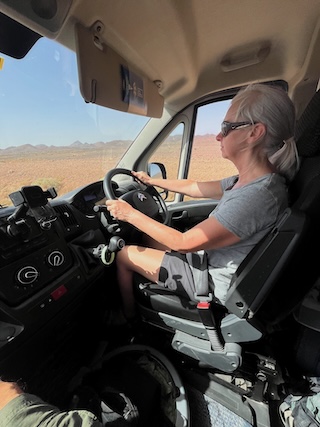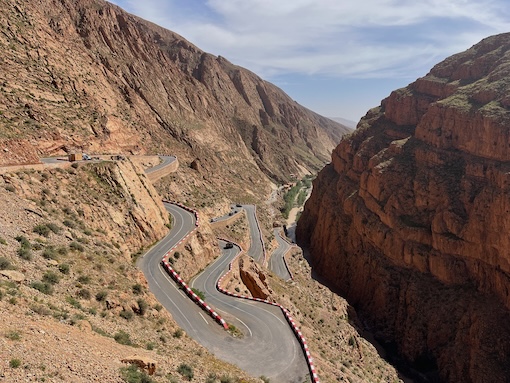
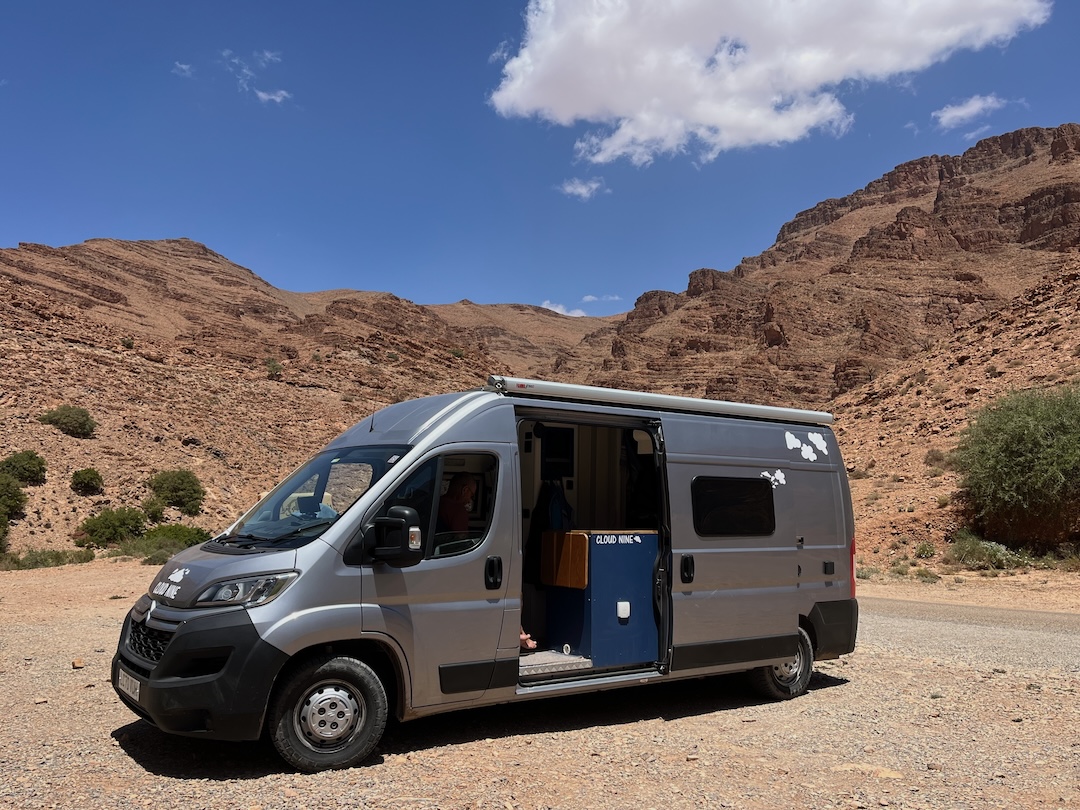
In this post we highlight some information to be aware of if you are planning on driving a camper van in Morocco. It is a fantastic country for a road trip and very camper van friendly.
We spent 10 weeks driving a camper van in Morocco in the spring of 2025 – you can read our full itinerary here.
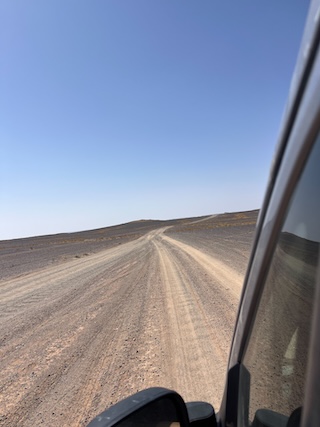
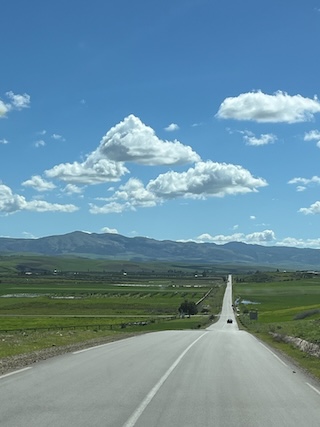
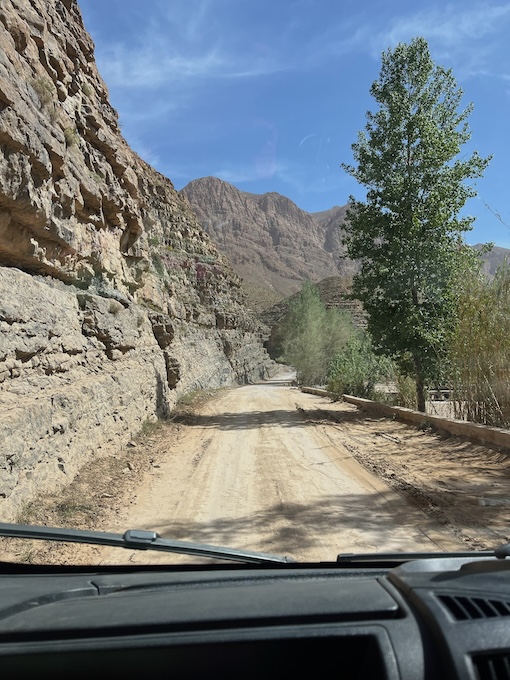
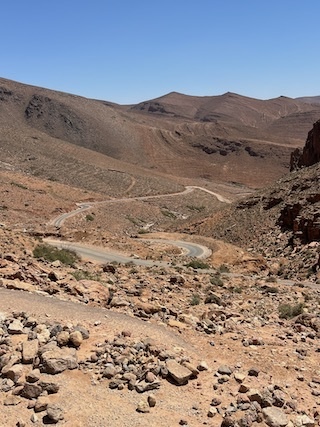
We covered a total distance of 4,572km/2,840 miles. We drove on all sorts of surfaces, from smooth sealed tarmac roads to corrugated sandy and rough gravel tracks in our 2WD self-built Citroen Relay camper van. Everywhere we wanted to go was accessible to us – mountains, desert, cities, coast. You will only need a 4WD if you are planning on driving off-road through the desert.
Driving Essentials
You need to be aware of the following essentials for driving a camper van in Morocco:
- Drive on the right
- Distances are measured in kilometres
- The speed limit is 60km/h on urban roads, and 120km/h on the Autoroutes/motorways
- Third party only insurance is available to buy on arrival at Tanger Med port – more details in this blog post.
Diesel
If you’re driving a camper van in Morocco you will have no issue finding diesel. Fuel stations are easy to find in every town, even in the most obscure small towns! Diesel on average cost us between MAD10-11 per litre (around £1 per ltr). In general it was cheaper on the coast than inland. Credit cards are accepted at the majority of petrol stations, but not all, so be prepared to pay in cash if necessary.
Road Conditions
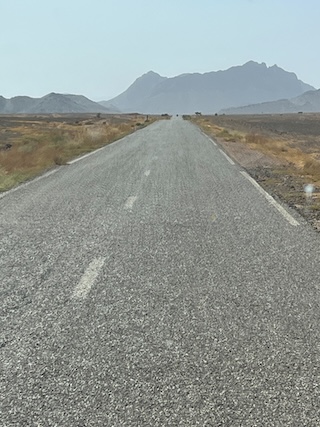
On the whole we found the main roads pretty good, albeit we did come across some serious potholes, unusual camber, and plenty of unmarked bumps! But let’s face it when you’re driving a camper van in Morocco, or anywhere else for that matter, you’re never going too fast anyway! Remember the speed limit on urban roads is 60km/h, and traffic cops are a very common sight.
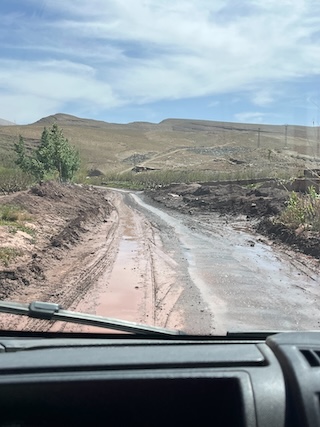
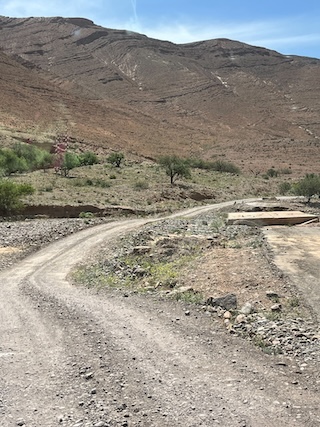
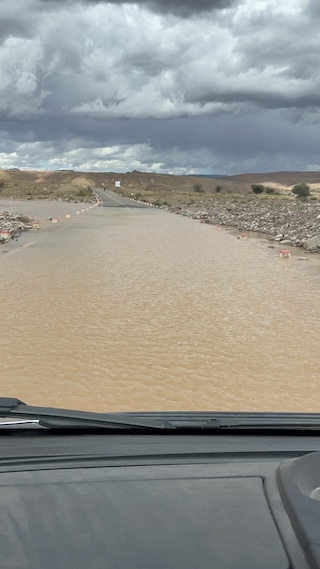
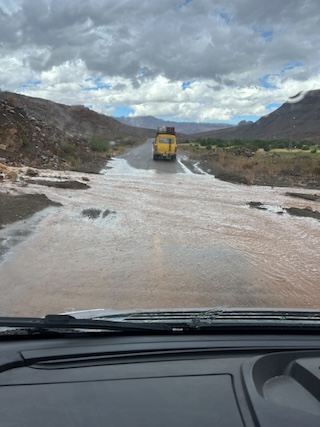
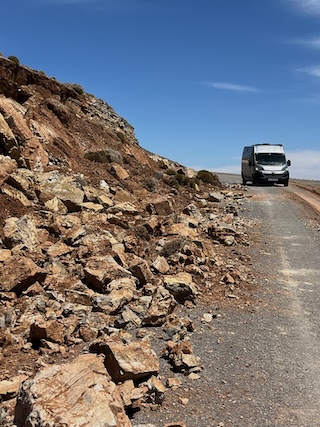
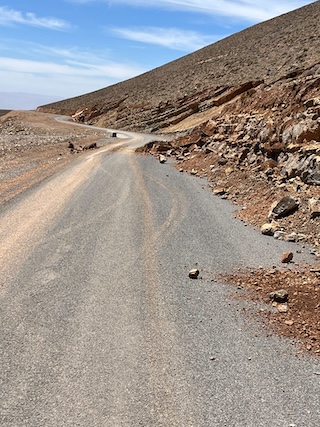
The more minor roads are a different case. Often these roads are gravel, or if you’re lucky one strip of tarmac down the middle of the gravel, and any road hazards are not necessarily marked with cones or signs, but with rocks!
There had been some heavy rain in the mountains while we were there causing a couple of roads to close for a few days. It wasn’t always easy to get up to date information on the road conditions, and there were times when we were passed the point of no return that we had to trust the locals telling us we could get through. We did encounter the occasional slip and some small fords to cross, but all very manageable in our van.
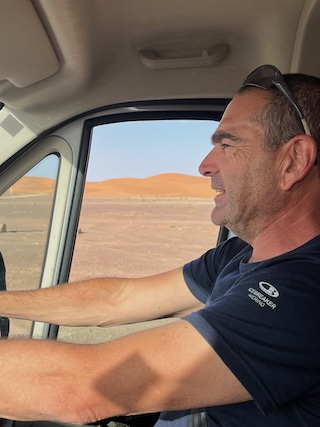
The access roads to Merzouga and the Sahara Desert are good sealed roads, but there is still no avoiding the dust and sand getting into the vehicle. We had to disconnect our smoke alarm while driving as the dust would constantly set it off!
We only used the Autoroute/toll roads twice on the trip, and it was not expensive. One we paid in the north of the country between Tanger Med and Martil was MAD16/£1.30, and the other was driving from Rabat to Asslah which cost MAD153/£12.
Traffic
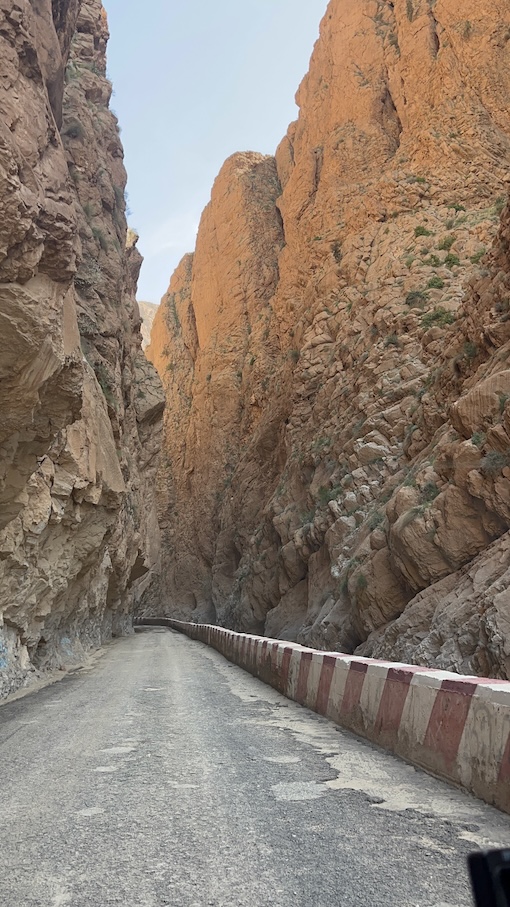
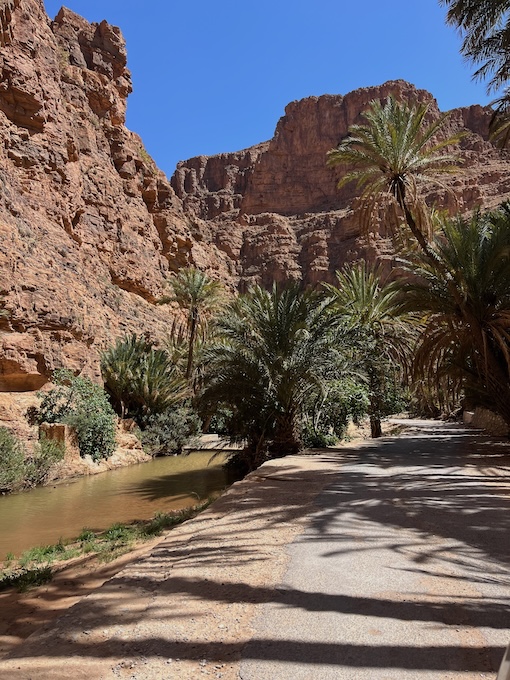
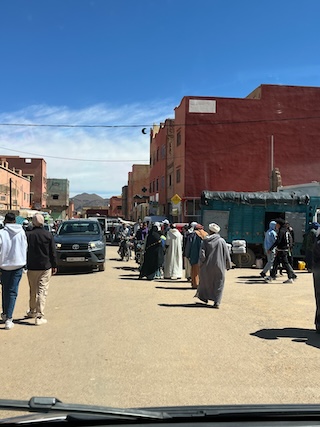
We found the traffic very light during the time we were there. There were times when we were driving that we barely saw another vehicle. The exception was in and around major towns and cities and tourist hotpots (e.g Todra Gorge) where you naturally expect congestion with coaches of day trippers coming and going. Even Marrakech was not nearly as bad as we’d thought it was going to be. Traffic there can be a bit crazy, and it pays to have two pairs of eyes on the look out especially if you’re in a right hand drive vehicle. Mopeds are coming at you from all angles!
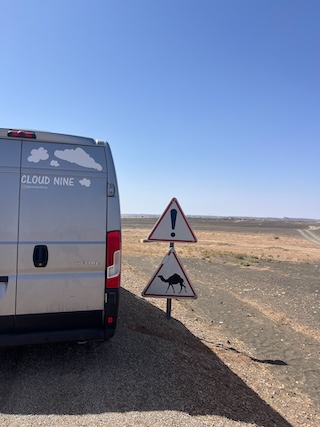
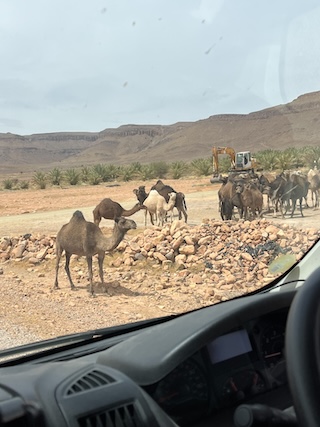
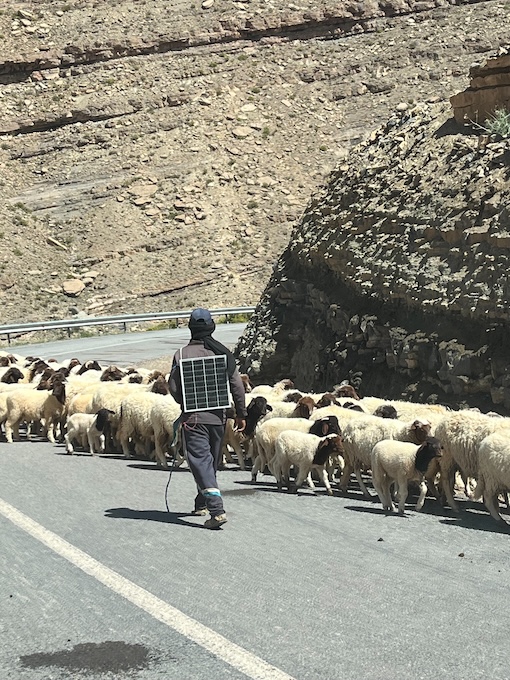
Often there are more camels, goats, sheep and donkeys on the roads than vehicular traffic, and that applies to urban as well as rural areas! Plus you have the pedestrians to watch out for.
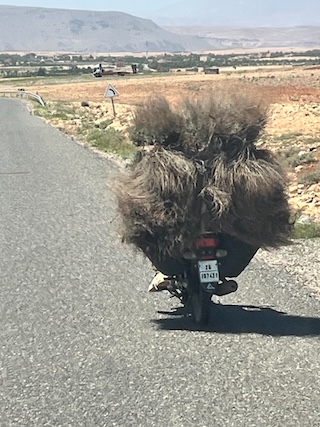
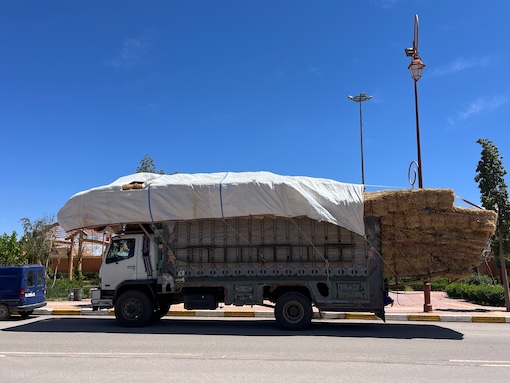
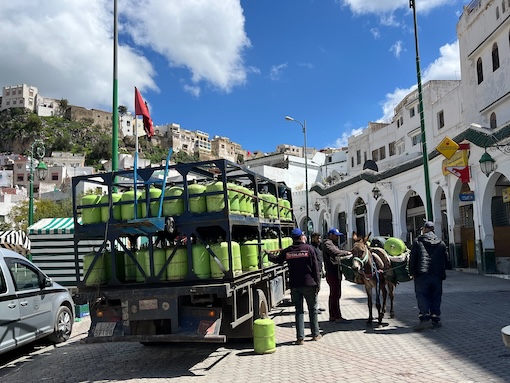
No matter where we were driving our camper van in Morocco we always, always saw lorries loaded with gas canisters. And as for some of the other loads of cargo you see being carried you just wonder how they don’t topple over!
Police
Watch out for the police if you are driving a camper van in Morocco. There are police and road checks everywhere – at most major intersections/junctions, and sometimes in the most unlikely of places! We heard from many other van travellers who received tickets for speeding, or not stopping completely at stop signs, or not slowing down enough at checkpoints.
It pays to stay on the safe side and adhere to the signs and always wait for instructions at manned checkpoints. We were always waved through every checkpoint with the exception of one where we felt the policeman was bored and just wanted a chat!
Navigation, Road signs & Place Names
The built-in satnav on our camper van is a Tom-Tom. It doesn’t include Morocco so we had to resort to a combination of maps.me (which we downloaded in advance for offline use), Google Maps, and a good old fashioned paper map. Because the paper map included Western Sahara we were advised to keep it out of sight to avoid confiscation by the police.
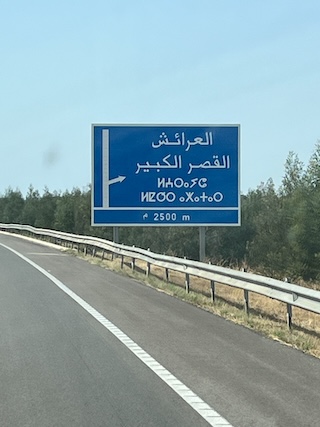
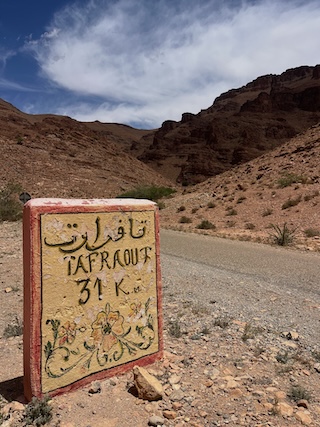
The road signs and place names you will see while driving a camper van in Morocco can be confusing to say the least. First of all place names can have multiple different spellings depending on the language being used – French, Arabic, Amazigh, or English. Secondly it depends on where you’re reading them – road signs, Google Maps, Lonely Planet, Park4Night, Michelin Maroc map, etc. As an example: Todra Gorge in Lonely Planet, Todgha Gorge on Google Maps, Gorges du Toudra on the Michelin Maroc map, and that’s not even including the Arabic versions!
What can go wrong driving a camper van in Morocco
Driving a camper van in Morocco was a pleasure for us, and as long as you abide by the law and respect the locals, you should have no issues. We tended to give the local traffic priority on the narrower rural roads, but in the cities it was every man for himself! You always need to keep an eye out for mopeds, donkeys, and shepherds with their sheep, and goats. It really helps having two sets of eyes and two people to share the driving. We never risked driving in the dark at night, and always got to our destinations before sunset.
Like any road trip you and your vehicle have to be prepared to deal with all eventualities. Vehicles can break down and things can go wrong. We count ourselves lucky as we only had a few minor mishaps, and any of them could’ve happened in any country. The great thing about them happening in Morocco is that there is always a friendly local who is willing to help you fix the problems for not a lot of money!
For us the air conditioning broke down a day or two after we arrived in Morocco; we had an oil leak just before we reached the Sahara; the leg of our awning snapped off in a campsite in Tafraout; the windscreen washer pump packed up during a torrential downpour in Zagora; we had one slow puncture in our final week from a screw in the tyre; and the smoke alarm was constantly going off triggered by all the sand and dust!
It is a truly great country for a road trip and we would highly recommend driving a camper van in Morocco. Remember to stop and take in the views and vistas, Morocco is full of them! And be prepared to embrace the sand and dust, there’s no getting away from it!
If you’re planning on driving a camper van in Morocco, take a look at this blog post for our checklist of things to do before you take your vehicle to Morocco.
Safe travels!